
Coffee
Grind size isn’t a matter of taste preference — it’s a matter of contact time and surface area, the same reason oversteeped tea turns bitter and understeeped tea turns weak and watery.
Why grind size exists as a variable at all
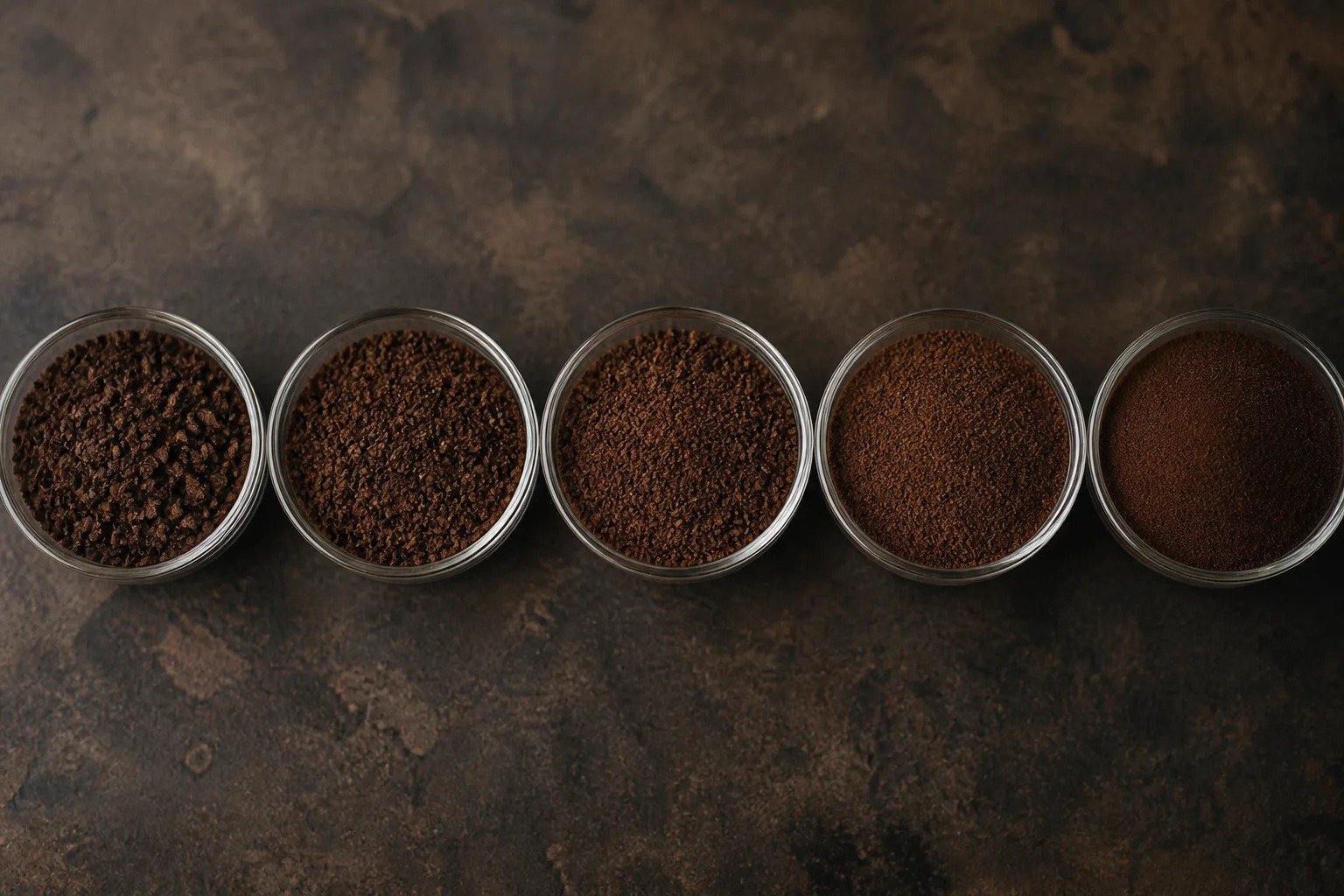
Extraction happens through the surface area of ground coffee exposed to water, and different brew methods have wildly different contact times: espresso runs roughly 25–30 seconds, drip runs several minutes, cold brew runs 12–24 hours. Grind size is how each method compensates for that time difference — less contact time needs finer grounds to extract enough, more contact time needs coarser grounds so it doesn’t extract too much.
What too fine actually tastes like
Over-extraction: bitter, harsh, sometimes described as “burnt” even when the roast itself was fine. It happens because water pulls compounds out beyond the desirable ones once contact time and surface area exceed what the method calls for.
What too coarse actually tastes like
Under-extraction: sour, thin, weak, sometimes with an odd salty or briny note. Water passes through too fast to pull out the full range of flavor compounds, so you’re mostly tasting the earliest, sharpest ones.
The grind size that matches each brew method
| Method | Grind size | Texture comparison |
|---|---|---|
| Espresso | Fine | Table salt |
| Pour-over | Medium-fine | Coarse sand |
| Drip | Medium | Sea salt |
| French press | Coarse | Breadcrumbs |
| Cold brew | Extra coarse | Peppercorns |
Texture comparisons are a common shorthand, not a lab measurement — use them as a starting reference, not an exact spec.
If a cup tastes bitter, grind coarser next time. If it tastes weak or sour, grind finer. That one adjustment fixes more bad cups than switching beans ever will.
Run Your Life on Your Own Terms
The Keep — coffee, liberty, and capital, one email a week. No fluff, no spin.

Sam Whitfield
Writes The Keep’s Coffee coverage — cost-per-cup math, gear that’s actually worth buying, and what your daily ritual says about your spending. No snobbery, no religion about brew method.
More like this: The Coffee Guide indexes everything we have published in this pillar.