
Capital
“It’s only $12 a month” is the sentence that’s quietly draining more people’s budgets than any single big purchase. Run the actual annual number before you decide whether $12 a month is nothing.
The monthly number is lying to you
Not lying maliciously — just doing what small numbers do, which is feel smaller than they are. $12 sounds like nothing. $144 a year for one thing you might use twice a month sounds like something worth a second look. Same number, different framing, completely different decision.
An illustrative audit, line by line
| Subscription (example) | Monthly | Annual |
|---|---|---|
| Streaming service A | $15.99 | $191.88 |
| Streaming service B | $9.99 | $119.88 |
| App subscription (rarely opened) | $4.99 | $59.88 |
| Meal kit / delivery membership | $14.99 | $179.88 |
| Gym membership | $39.99 | $479.88 |
| Total | $85.95 | $1,031.40 |
Illustrative example figures — run this with your own actual statements, not these numbers. The point is the method, not this specific total.
How subscriptions creep without you noticing
Almost nobody sits down and decides to spend $1,000 a year on recurring services. It happens five and ten dollars at a time, each one individually reasonable, added months apart, never reviewed together. The subscription model is specifically built around that — small enough to not trigger a second thought, recurring enough to add up fast.
How to actually run this audit yourself
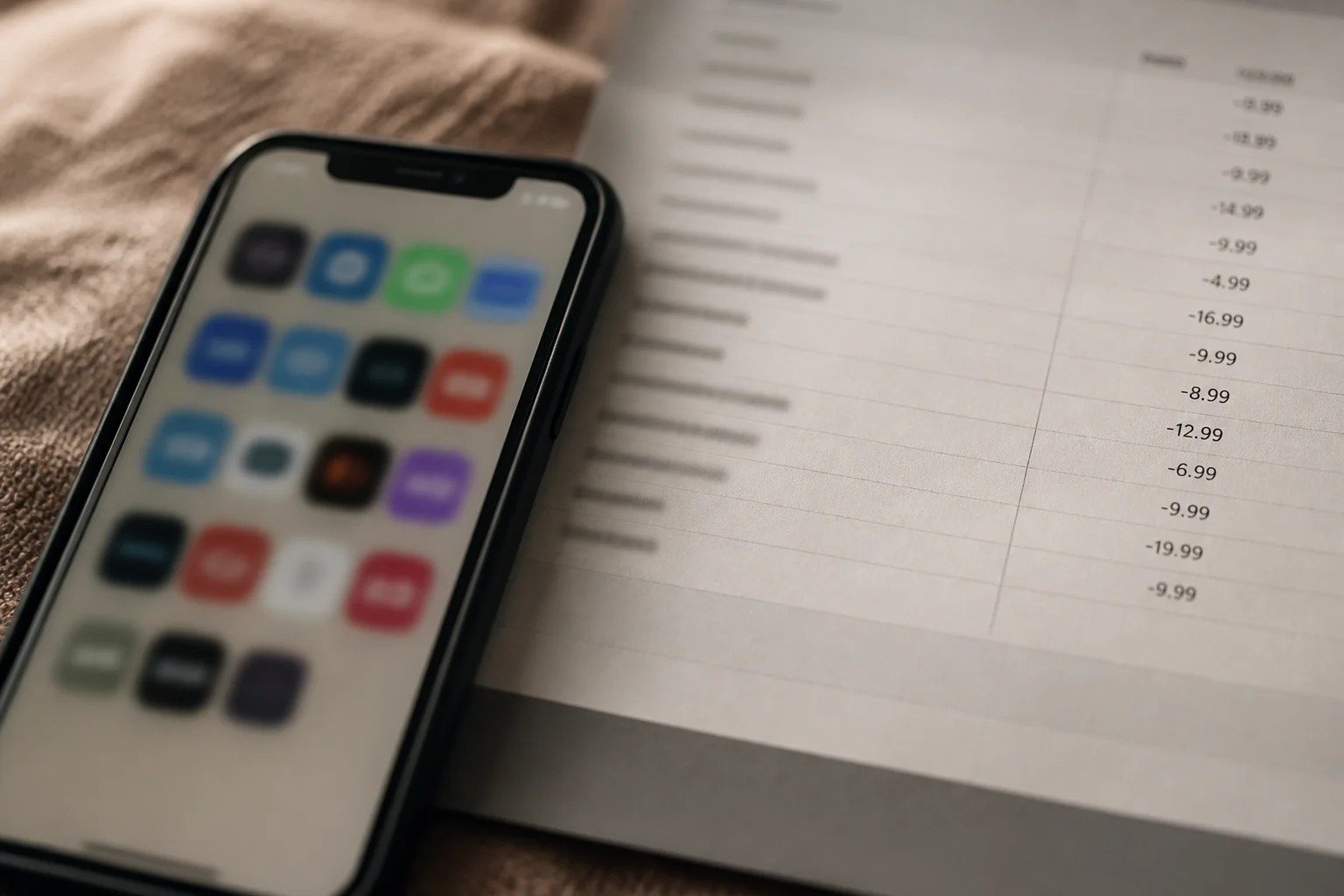
Pull the last two months of a bank or card statement, not a budgeting app’s summary — the actual line items. List every recurring charge, multiply each by twelve, and add them up before you decide whether any single one is worth cutting. The annual total is almost always higher than a gut-check guess, and seeing the real number is what actually changes behavior, not vague advice to “cut subscriptions.”
Run Your Life on Your Own Terms
The Keep — coffee, liberty, and capital, one email a week. No fluff, no spin.

Devon Marsh
Covers Capital with one rule: no vague claims. If it’s not a real number, it doesn’t make the piece. Direct, high-energy, allergic to hand-waving.
More like this: The Capital Guide indexes everything we have published in this pillar.