
Coffee
A price jump on your regular bag of coffee usually isn’t a roaster getting greedy — it’s often a delayed pass-through of something that happened on a farm a continent away, months earlier.
Why coffee is a commodity crop with volatile pricing
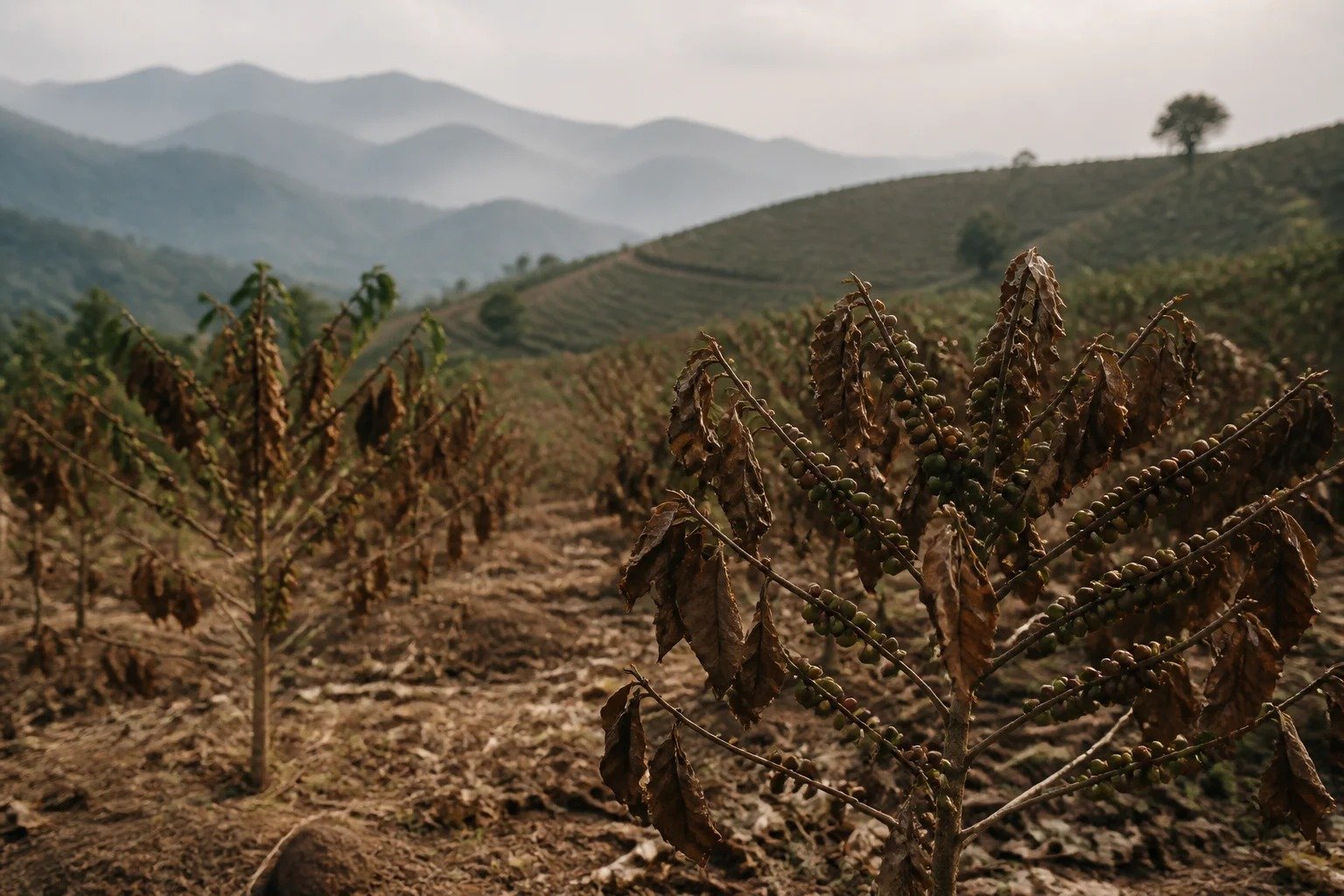
Coffee, arabica especially, trades on futures markets and swings on production estimates the way other agricultural commodities do. Arabica grows almost entirely within a narrow band of tropical, high-altitude regions, which concentrates risk — a frost or drought in one major growing region can move global supply meaningfully in a single season, since there’s no large diversified slack elsewhere to absorb it quickly.
What actually causes a “bad” harvest year
Frost damaging trees (which then take multiple seasons to fully recover, not just one bad year), drought during flowering or fruiting, disease outbreaks, and heat stress in traditional growing regions all reduce yield in ways that compound rather than resolve in a single following season.
How a harvest shortfall reaches your grocery bag
Rising green (unroasted) coffee commodity prices get passed through a roaster’s cost structure over the following months. Most roasters lock in supply contracts ahead of time, so retail price increases usually lag the actual harvest event by a couple months to a year — not instantly.
What you can actually do about it as a buyer
Not much to control the price directly, but locking in a subscription or a larger bag size during stable pricing periods helps, and understanding that a price increase often reflects a real upstream supply shock — not price-gouging — makes it easier to evaluate whether a roaster’s pricing actually seems reasonable.
Run Your Life on Your Own Terms
The Keep — coffee, liberty, and capital, one email a week. No fluff, no spin.

Sam Whitfield
Writes The Keep’s Coffee coverage — cost-per-cup math, gear that’s actually worth buying, and what your daily ritual says about your spending. No snobbery, no religion about brew method.
More like this: The Coffee Guide indexes everything we have published in this pillar.